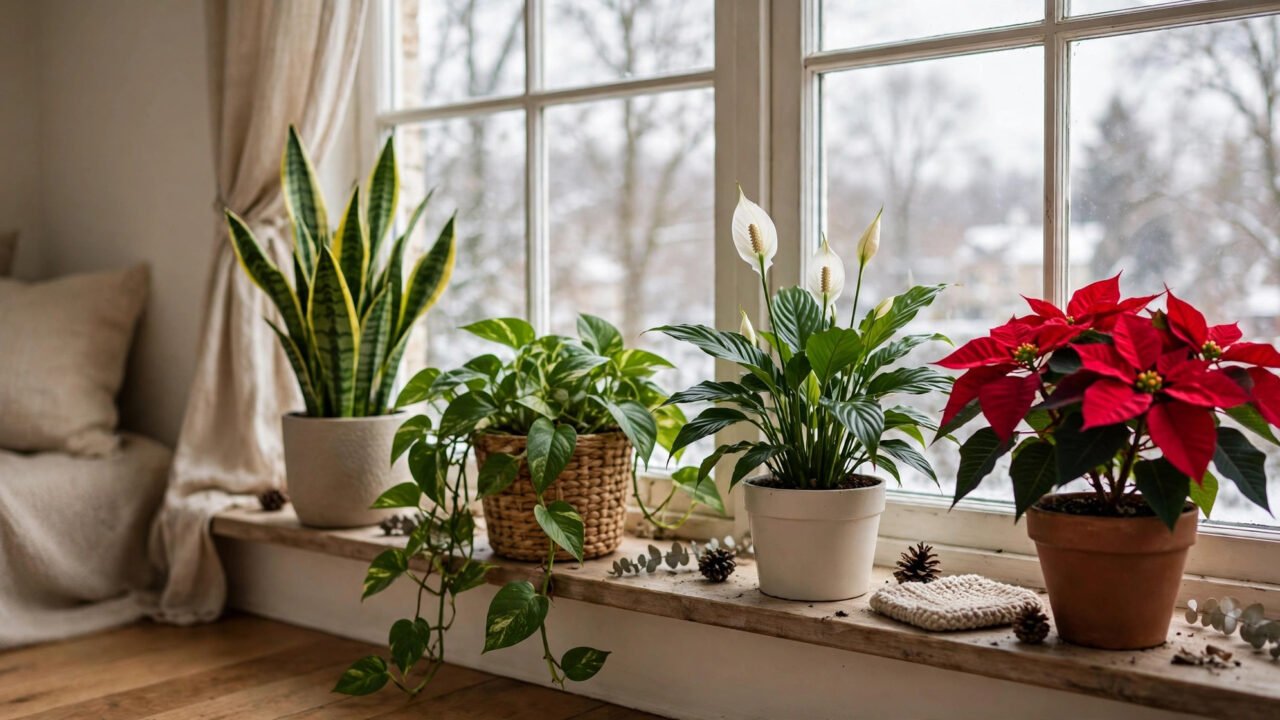
The 12 Best Winter Indoor Plants turn the coldest months into the coziest season for your home. When the days are short and the garden is asleep, a few well-chosen plants bring color, texture, and life to every room. This list covers twelve plants that handle low light, dry indoor air, and chilly windowsills better than most.
Each one is easy to find and simple to care for. From forgiving foliage to cheerful winter blooms, the 12 Best Winter Indoor Plants below are grouped by light and room, so you can pick with confidence.
Table of Contents
Why Winter Is the Best Time to Grow Plants Indoors
Winter pushes us indoors, and that is exactly when a home needs something alive. Bare branches outside make green leaves inside feel even more welcome, and a plant on the sill softens a room in a way few decorations can.
The word houseplants covers any plant grown indoors for decoration, and many of the toughest kinds come from shady forest floors where direct sun is rare. That background is good news in winter, when sunlight is weak and short-lived.

Winter care is mostly about restraint. Most indoor plants grow slowly in the cold months, so they need less water and no fertilizer until spring. A bright windowsill, a spot away from cold drafts, and a watering can used sparingly will carry the 12 Best Winter Indoor Plants through until the days lengthen again.
12 Best Winter Indoor Plants for Low Light
If your windows face north or a tall building blocks the sun, start here. The first three of the 12 Best Winter Indoor Plants are the toughest low-light choices on this list, and they forgive a dim corner, a missed watering, and dry winter air.

1. Snake Plant
With tall, sword-like leaves, the snake plant is one of the most forgiving plants you can own. It tolerates low light, dry air, and long stretches without water, which makes it a natural fit for winter. It suits beginners and anyone who has killed a plant before.
In winter, keep it in indirect light and water only when the soil is dry all the way through. A tall pot on the floor shows off its shape best. Of the 12 Best Winter Indoor Plants, this is the hardest one to kill.
Pro tip: In a cool room, watering once a month is often enough.
Mistake to avoid: Watering on a summer schedule. Wet soil in winter leads to soft, rotting leaves.
2. ZZ Plant
The ZZ plant has glossy, oval leaves on arching stems, and it stores water in thick underground rhizomes. That reserve makes it one of the easiest plants to keep alive through winter. It suits low-light rooms and anyone who forgets to water.
Give it indirect light and water only when the soil is fully dry. Few plants are as forgiving, which is why it belongs among the 12 Best Winter Indoor Plants.
Pro tip: Wipe the leaves now and then to keep them glossy.
Mistake to avoid: Keeping the soil constantly damp. Soggy roots rot fast in cold weather.
3. Pothos
Pothos is a trailing vine with heart-shaped leaves in green, golden, and variegated forms. It grows happily in low light. It suits shelves, hanging baskets, and first-time plant owners.
In winter, let the top of the soil dry before watering, and trim long stems to keep the plant full. Let it trail from a high shelf or along a bookcase. It earns its place among the 12 Best Winter Indoor Plants with almost no effort.
Pro tip: Snip a stem in late winter and root it in water.
Mistake to avoid: Leaving it in a cold draft by a window, which can brown the leaves.
Winter Indoor Plants That Bloom Indoors
Flowers feel like a small celebration in the middle of winter. These three of the 12 Best Winter Indoor Plants add color when everything outside is bare.
4. Poinsettia
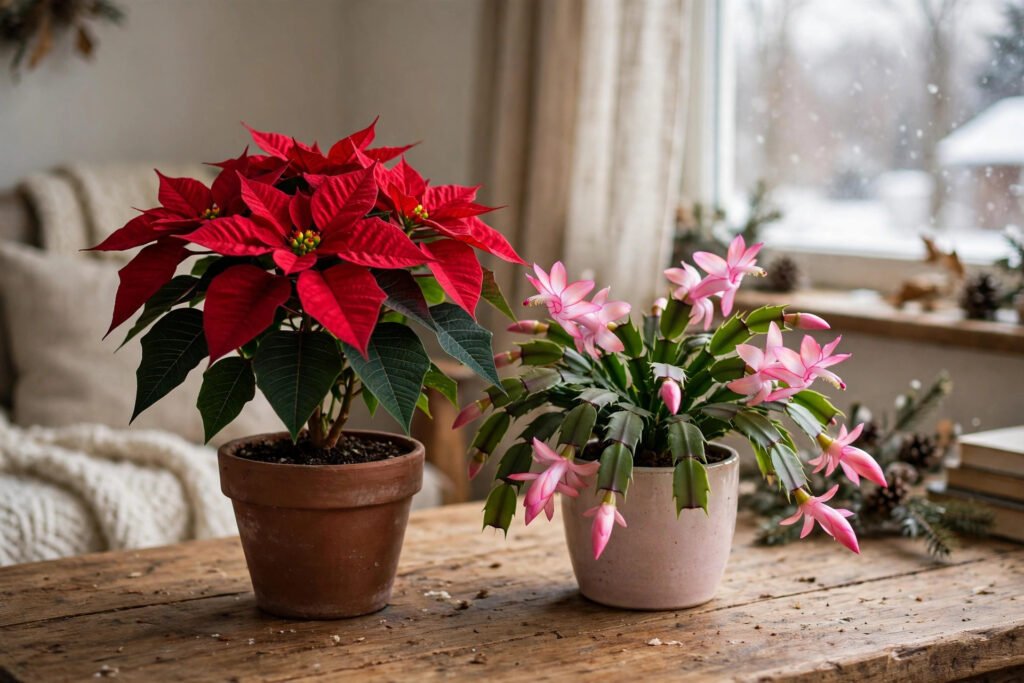
The poinsettia is the classic red plant of the holiday season, with bright bracts that look like flowers. It suits anyone who wants instant festive color.
The poinsettia is a well-known winter holiday plant, and it does best in bright, indirect light away from drafts and radiators. Water when the top of the soil feels dry, and empty the saucer so roots never sit in water. No list of the 12 Best Winter Indoor Plants would be complete without it.
Pro tip: Wrap the plant in paper for the trip home to protect it from cold air.
Mistake to avoid: Placing it beside a drafty door or a hot radiator, which drops its leaves fast.
5. Christmas Cactus
The Christmas cactus has flat, segmented stems and produces pink, red, or white flowers around the holidays. It suits people who want winter blooms without much fuss.
Give it bright, indirect light and water when the top inch of soil dries out. A cool room encourages buds to form. It is one of the 12 Best Winter Indoor Plants for reliable winter color.
Pro tip: Leave it in one spot once buds appear. Moving it can make the buds drop.
Mistake to avoid: Overwatering while it blooms. Wet soil stresses the plant and shortens the show.
6. Amaryllis
Amaryllis grows from a bulb into a tall stem topped with large trumpet flowers in red, pink, or white. It suits anyone who wants a showpiece for the winter table.
Plant the bulb with its top above the soil, give it bright light, and water sparingly until growth appears. A heavy pot keeps the tall stem steady. It is the showiest of the 12 Best Winter Indoor Plants.
Pro tip: Turn the pot every few days so the stem grows straight.
Mistake to avoid: Soaking the bulb before it sprouts. Too much water early on can rot it.
Best Winter Indoor Plants for Your Bedroom
A bedroom should feel calm, and a plant or two can make it feel like a retreat. These two of the 12 Best Winter Indoor Plants are quiet, low-maintenance choices that look lovely beside a bed or on a dresser. If you want the whole room to feel restful, our cozy winter bedroom ideas show how greenery works beside the bed.
7. Peace Lily
The peace lily has deep green leaves and white, sail-like flowers that appear through the year. It tolerates low light and uneven watering, which makes it a kind choice for a bedroom.
Keep the soil lightly moist and give it a spot out of direct sun. Its soft shape looks gentle on a nightstand or dresser. For a calm bedroom, it is one of the 12 Best Winter Indoor Plants you can choose.
Pro tip: It droops when thirsty and perks up after watering.
Mistake to avoid: Letting it dry out completely for days, which browns the leaf tips.
8. Spider Plant
The spider plant has arching, striped leaves and sends out long stems tipped with baby plants. It suits hanging baskets and high shelves, and it is easy to care for and quick to grow.
Give it bright, indirect light and water when the top of the soil dries. Hang it where the plantlets can dangle.
Pro tip: Pot up a baby plantlet to grow a second plant.
Mistake to avoid: Letting the soil stay soggy. Good drainage matters more than frequent watering.
Best Winter Indoor Plants for the Living Room
The living room is where plants make the biggest visual impact. These two of the 12 Best Winter Indoor Plants have bold leaves that fill a corner or anchor a side table. Warm earthy tones and deep greens go well together, and our guide to warm earthy living room decor shows how greenery fits the palette.
9. Monstera Deliciosa
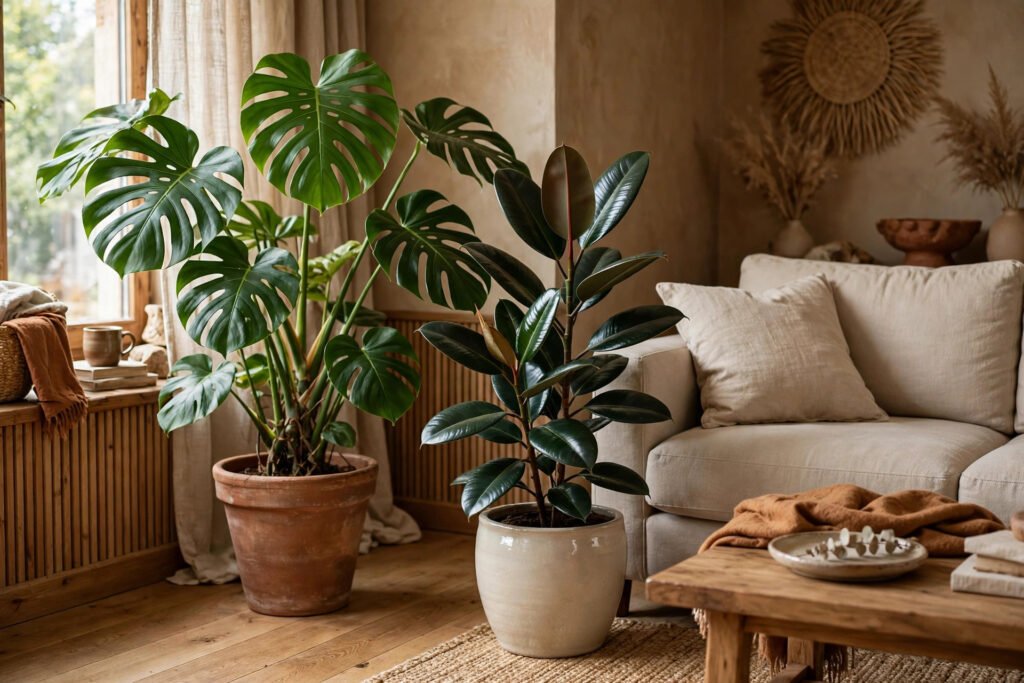
Monstera is famous for its large, split leaves, and a healthy plant becomes a living sculpture in a living room. It suits spacious rooms and plant lovers with space for it to spread.
Give it bright, indirect light and water when the top of the soil dries. A moss pole gives the stems something to climb. It is the boldest of the 12 Best Winter Indoor Plants.
Pro tip: Give it room. A cramped corner keeps new leaves small and unsplit.
Mistake to avoid: Placing it in a dark corner. Without enough light, growth slows and leaves stay small.
10. Rubber Plant
The rubber plant has large, glossy leaves in deep green, sometimes edged in burgundy or cream. It grows upright and tidy, which suits modern and classic living rooms alike.
Give it bright, indirect light and water sparingly in winter, when growth slows. Wipe the leaves to keep their shine.
Pro tip: Prune the top in spring to encourage side branches.
Mistake to avoid: Moving it often. It drops leaves when its light and temperature keep changing.
Best Winter Indoor Plants for Small Spaces and Desks
Small rooms and desks still deserve a touch of green. These last two of the 12 Best Winter Indoor Plants stay compact, need little fuss, and look good on a shelf or beside a laptop. A plant on your desk can make a workday feel calmer, and our budget home office makeover ideas show how greenery fits a low-cost refresh.
11. Jade Plant
The jade plant is a succulent with thick, round leaves on woody stems, and it slowly grows into a small tree shape. It suits sunny windowsills and people who forget to water.
Give it bright light and water only when the soil is dry through. A shallow, well-draining pot suits its slow growth. It is the tidiest of the 12 Best Winter Indoor Plants for a sunny desk.
Pro tip: Turn the pot every few weeks so it grows evenly.
Mistake to avoid: Watering on a fixed schedule. Check the soil first, every time.
12. Air Plants
Air plants need no soil at all. They absorb moisture from the air through their leaves, so they need no pot and no soil.
They suit shelves, glass holders, and creative displays in tight spots. Give them bright, indirect light and mist or soak them weekly, then let them dry fully. They round out the 12 Best Winter Indoor Plants as the most flexible choice for small spaces.
Pro tip: Display them in an open glass holder, away from cold window glass.
Mistake to avoid: Leaving them wet inside a closed container, where trapped moisture causes rot.
How to Care for Winter Indoor Plants
Light is the first thing to check. Move plants closer to your brightest windows in winter, and rotate each pot every week or two so all sides get light.
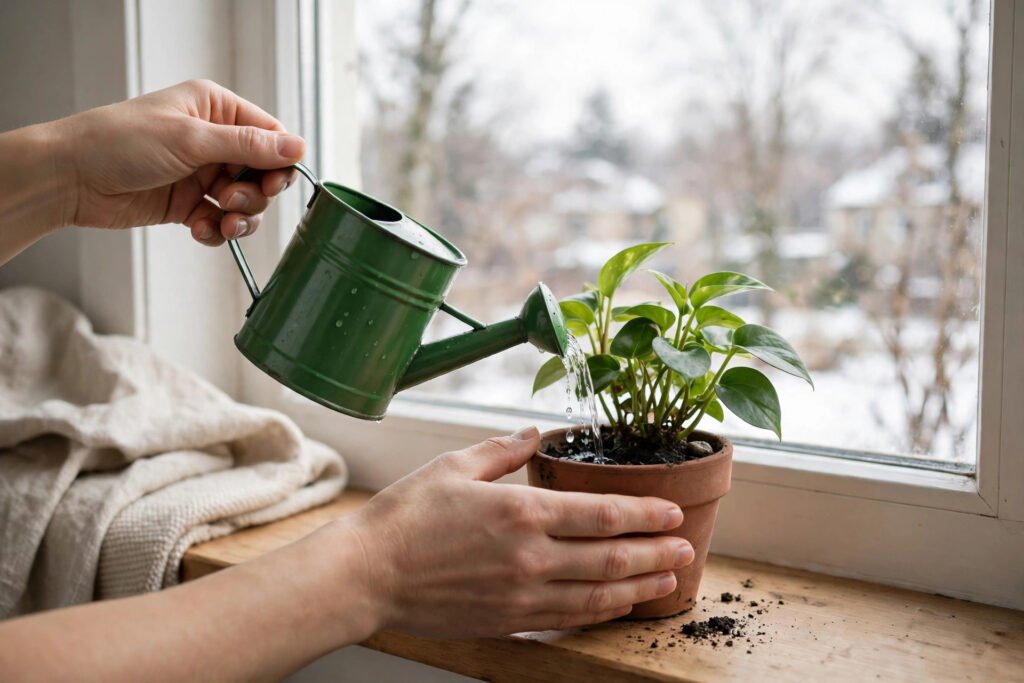
Water less than you did in summer. Most indoor plants rest in winter and use far less water, so always check the soil before you reach for the can. If the top inch is still damp, wait.
Cold water can shock roots, so use water at room temperature.
Dry heated air is the other winter challenge. Grouping plants together raises the humidity around them, and a shallow tray of pebbles and water under a pot helps too. Keep plants away from radiators and cold drafts.
A little planning goes a long way in a small home. Group plants on one shelf or windowsill to make watering easy and keep surfaces clear.
If floor space is tight, our small-space winter organizing ideas show how to fit greenery into a small room without clutter. These habits keep the 12 Best Winter Indoor Plants healthy until spring.
Frequently Asked Questions
What Are the 12 Best Winter Indoor Plants for Beginners?
The easiest of the 12 Best Winter Indoor Plants for beginners are the snake plant, ZZ plant, pothos, and spider plant. They forgive low light, irregular watering, and dry air. Start with one, learn its rhythm, and add more once it is thriving.
How Often Should I Water Indoor Plants in Winter?
Less often than in summer. Most indoor plants need water only when the top inch or two of soil feels dry, which may be every two to four weeks in a cool room. Always check the soil first.
Which Winter Indoor Plants Are Safe Around Pets?
Some indoor plants can be toxic to pets if eaten, so check each variety before you buy if you share your home with cats or dogs. When in doubt, use high shelves or hanging planters.
Can I Keep a Poinsettia After the Holidays?
Yes. Keep it in bright, indirect light, water when the top soil dries, and trim it back in spring. Getting it to turn red again takes months of long, dark nights, so most people enjoy it as a green plant.
Bring the 12 Best Winter Indoor Plants Home This Winter
The 12 Best Winter Indoor Plants prove that the cold months can be the greenest months indoors. Pick one that matches your light, give it a good spot, and water with a light hand.
Start with one plant this week, and add another when the first one is thriving. For more ideas, browse our other home decor guides and keep building a home that feels warm all season long.


2 comments