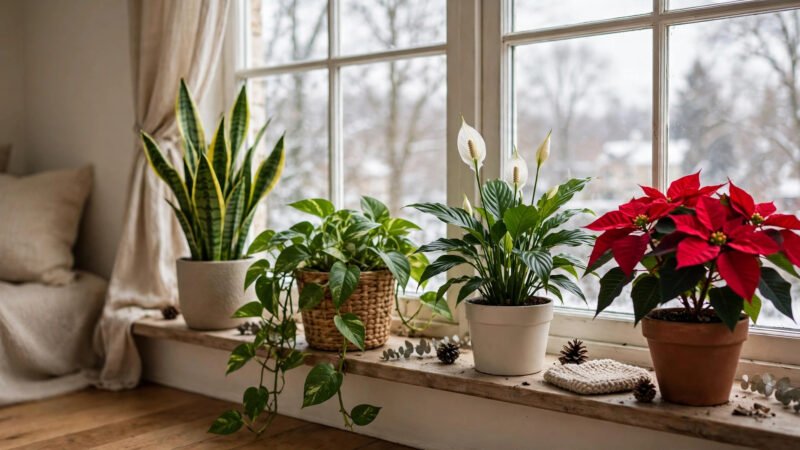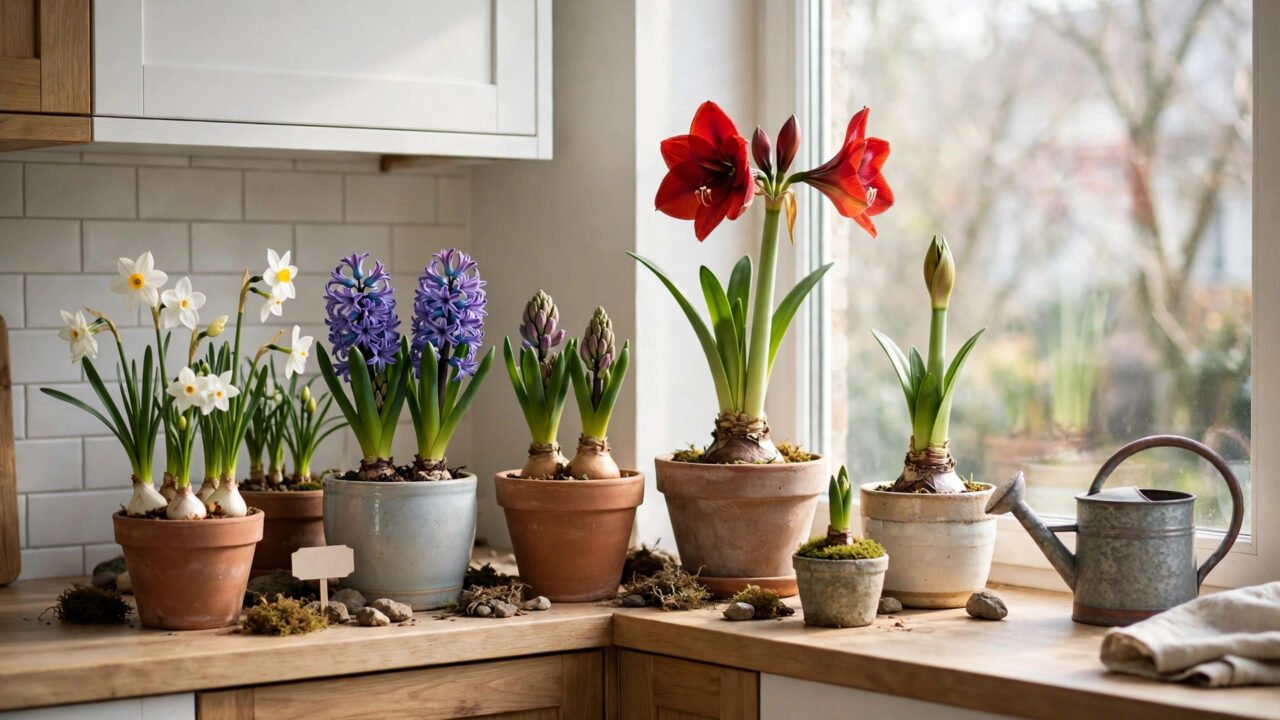
These 12 Winter Bulbs to Force Indoors will fill your home with fresh flowers in January, using nothing more than a pot, a little soil, and a sunny windowsill. No garden bed, no greenhouse, and no long wait through the cold months.

Forcing a bulb means waking it up early, indoors, so it blooms weeks before it would outside. The 12 Winter Bulbs to Force Indoors below include fast, no-chill favorites and classic spring bulbs that need a cold start in the fridge first.
Table of Contents
12 Winter Bulbs to Force Indoors: Start With the Easiest
The easiest bulbs need no cold period at all. These first three of the 12 Winter Bulbs to Force Indoors go straight into a pot and start growing within days. They also forgive a missed watering better than the chill-loving kinds do.
Pair them with our best winter indoor plants for a windowsill that stays green and blooming all season.

1. Paperwhite Narcissus
Paperwhite narcissus is the fastest of the 12 Winter Bulbs to Force Indoors, blooming in three to five weeks with clusters of small white flowers and a strong, sweet scent. It suits impatient beginners and anyone who wants flowers before Christmas. A paperwhite needs no soil at all and grows happily in a bowl of pebbles and water.
Set the bulbs pointed-end up on a layer of pebbles, add water until it just touches the base of the bulbs, and keep the bowl in a cool, bright spot. Roots appear in a few days, and the stems rise fast once the light is strong.
Pro tip: Start a new bowl every two weeks from November onward. The staggered planting keeps fresh blooms coming all winter long.
Mistake to avoid: Letting the bulbs sit in deep water. The base should just touch the water, or the bulb will rot before it blooms.
2. Amaryllis
An amaryllis bulb is the showstopper of the 12 Winter Bulbs to Force Indoors, with huge trumpet flowers in red, white, pink, or striped petals on a tall, sturdy stem. It suits anyone who wants one dramatic flower rather than a crowd of small ones. A single bulb fills a whole corner of the room.
Plant the bulb in a pot just a little wider than the bulb itself, with the top third sitting above the soil. Water it well once, then water lightly until a green shoot appears. Give it bright light and turn the pot every few days so the stem grows straight.
Pro tip: Stake the stem when it reaches about a foot tall. A heavy bloom can topple the pot, and a thin bamboo stake keeps it upright.
Mistake to avoid: Watering on a schedule instead of checking the soil. Amaryllis rots easily in wet soil, so water only when the top inch feels dry.
3. Hyacinth
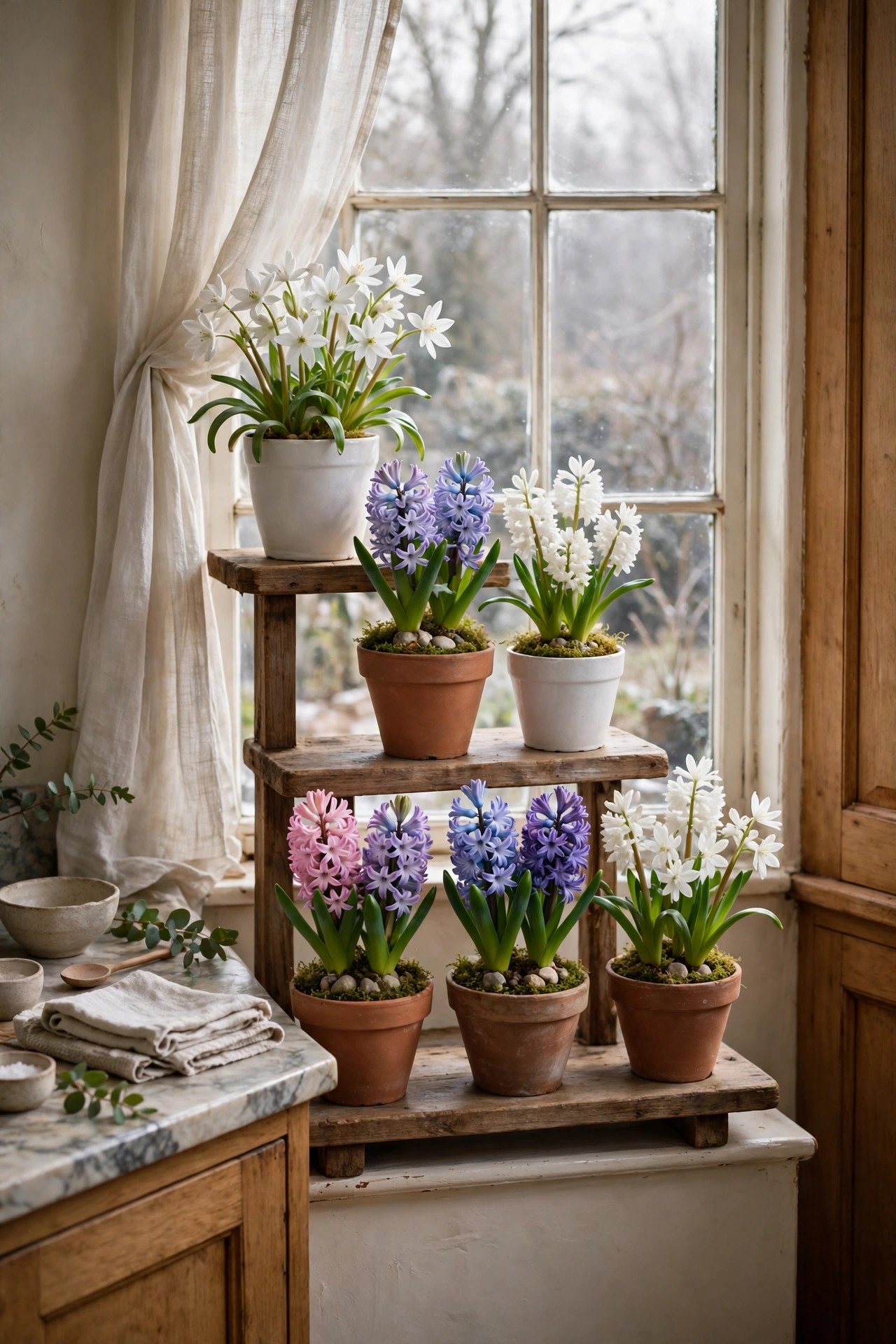
Hyacinth brings the strongest scent of the 12 Winter Bulbs to Force Indoors, with dense spikes of pink, blue, purple, or white flowers that perfume a whole room. It suits anyone who loves fragrance and wants a small pot with a big presence. One hyacinth on a bedside table is enough to scent the bedroom.
Buy pre-chilled bulbs to skip the cold treatment, then plant them pointed-end up with the tip just above the soil. Keep the pot in a cool, dark place for a week or two until roots form, then move it into bright light.
Pro tip: Grow a single hyacinth in a tall glass vase of water, bulb resting on the rim. The roots make a pretty display of their own.
Mistake to avoid: Handling the bulbs with bare hands if your skin is sensitive. Hyacinth bulbs can irritate skin, so wear gloves when planting.
Classic Spring Bulbs, Forced Early
Spring bulbs need a cold period before they will bloom, and the fridge does the job of winter for you. The next four of the 12 Winter Bulbs to Force Indoors go into the fridge for eight to twelve weeks, then come out to bloom in January.
A sunny kitchen counter suits them well, and our winter kitchen decor ideas show how to style that corner so it feels intentional, not cluttered.
4. Crocus
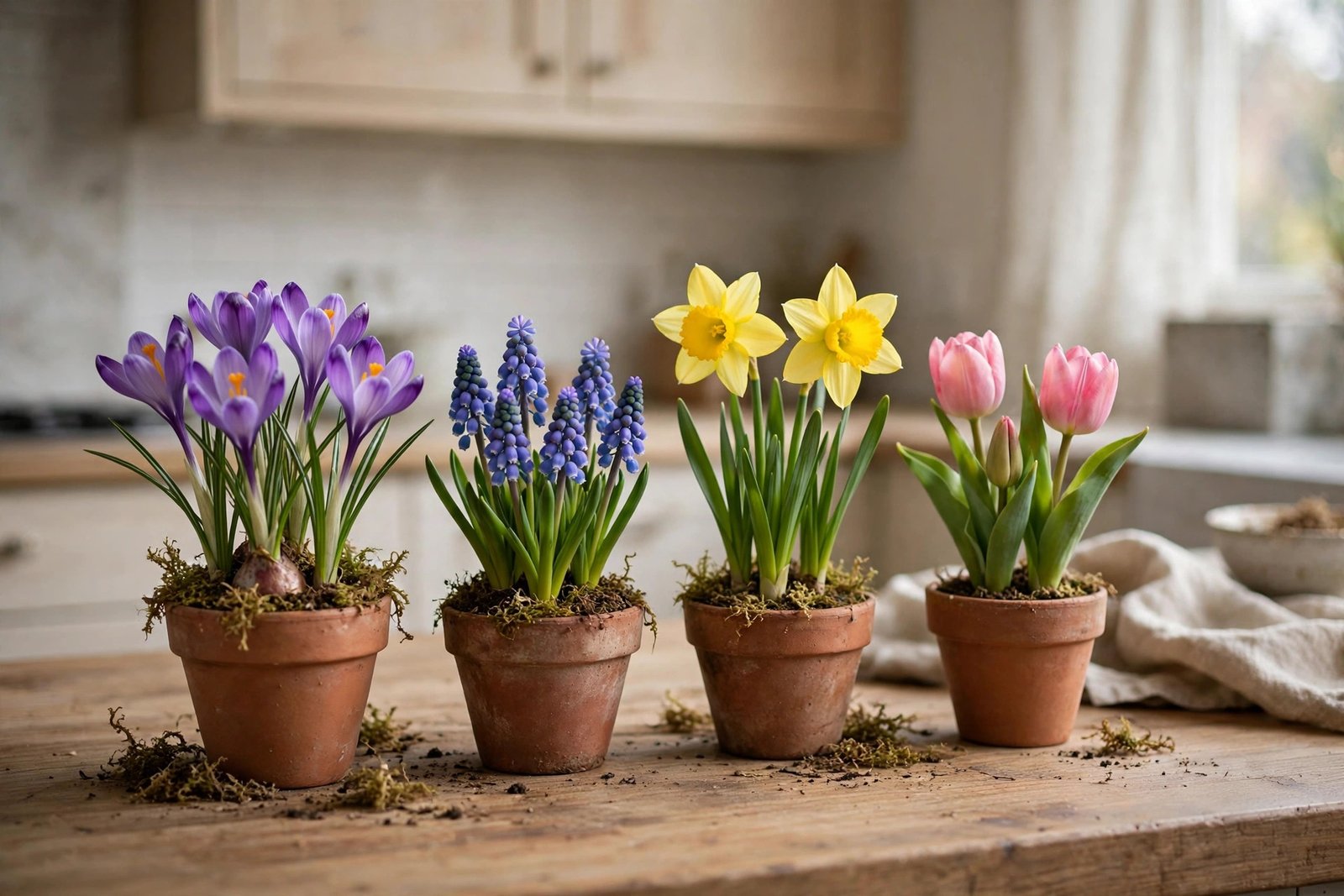
Crocus is the earliest spring flower of the 12 Winter Bulbs to Force Indoors, with small purple, yellow, or white cups that open in the sun and close at night. It suits small pots and shallow bowls, and a dozen bulbs in one pot make a charming display. Crocus is also one of the cheapest bulbs to force, so it is easy to plant plenty.
Chill the bulbs in a paper bag in the fridge for ten to twelve weeks, away from fruit, which gives off a gas that harms flower buds. Then pot them close together in shallow soil, water well, and keep them cool and bright.
Pro tip: Plant crocus in layers with taller bulbs underneath. The crocus blooms first, then the taller flowers take over.
Mistake to avoid: Storing bulbs next to apples or bananas in the fridge. The ethylene gas from ripening fruit can stop the buds from forming.
5. Grape Hyacinth
Grape hyacinth, or Muscari, is the cutest of the 12 Winter Bulbs to Force Indoors, with tiny blue bells packed along a short stem like a bunch of grapes. It suits windowsill pots, small baskets, and anyone who loves blue flowers in winter. A pot of grape hyacinth looks like a miniature spring meadow.
Chill the bulbs for ten weeks in the fridge, then plant them an inch apart in a shallow pot. Water them in and keep the pot in a cool, bright spot.
Pro tip: Mix grape hyacinth with white crocus in the same pot. The blue and white pairing looks fresh and clean all January.
Mistake to avoid: Planting the bulbs too deep. An inch of soil over the top is enough, and deeper planting delays the bloom.
6. Daffodil
Daffodils are the classic spring flower of the 12 Winter Bulbs to Force Indoors, with cheerful yellow trumpets that say spring louder than any other bloom. They suit anyone who wants a big, sunny display and has a cool room to spare. Miniature varieties like Tete-a-Tete force best indoors because the stems stay short and sturdy.
Chill the bulbs for twelve weeks in the fridge, then pot them with the tips just above the soil. Keep the pot cool, around 55 to 65 degrees, and give it bright light. Turn the pot daily to keep the stems straight.
Pro tip: Choose miniature daffodils for indoor forcing. Tall varieties flop over indoors, while the short ones stand up on their own.
Mistake to avoid: Forcing daffodils in a warm room. Heat makes the stems stretch tall and weak, so a cool spot is essential.
7. Tulip
Tulips are the most elegant of the 12 Winter Bulbs to Force Indoors, with single cups in almost any color, from soft pink to deep red. They suit a formal display and anyone who wants a few perfect stems rather than a crowd. Tulips take patience, but the result is worth the wait.
Chill the bulbs for twelve to fourteen weeks, the longest of this group, then pot them pointed-end up with the tips at the soil surface. Water well and keep the pot in a cool, dark place for a week while roots form, then move it into bright light.
Pro tip: Plant tulips in a tall glass vase with pebbles instead of soil. The clear vase shows the roots, and the display looks clean and modern.
Mistake to avoid: Buying tulip bulbs late in the season. Late bulbs have less chilling time left, so buy them in early autumn and start the fridge treatment right away.
Small and Fragrant Finishers
Not every forced bulb needs to be big. The next three of the 12 Winter Bulbs to Force Indoors are small, delicate, and sweetly scented, and they fit the narrowest windowsill. A shelf or two is all the space they need, and these small-space organizing ideas for winter help a tray of bulbs fit neatly beside cookbooks and jars.

8. Snowdrop
Snowdrops are the most delicate of the 12 Winter Bulbs to Force Indoors, with tiny white bells nodding on thin green stems. They suit shaded windowsills and anyone who loves quiet, woodland flowers. Snowdrops bloom early and look best in a small cluster, not on their own.
Chill the bulbs for ten weeks, then plant them in a shallow bowl with the tips just below the surface. Keep the bowl cool and out of direct sun, and water it lightly but often.
Pro tip: Plant snowdrops in a moss-lined basket for a natural look. The green moss hides the soil and makes the white bells stand out.
Mistake to avoid: Letting the bulbs dry out during chilling. A paper bag in the fridge can dry them, so check them every few weeks and mist lightly if they shrivel.
9. Dutch Iris
Dutch iris is the most graceful of the 12 Winter Bulbs to Force Indoors, with slender blue, purple, or yellow flowers on tall, thin stems. It suits anyone who wants height in a small pot and a flower that looks like it came from a florist. A bunch of forced iris makes a lovely January bouquet.
Chill the bulbs for ten to twelve weeks, then plant them three inches deep in a deep pot. Keep the pot cool and bright, and water it sparingly until growth starts.
Pro tip: Cut iris stems for a vase as soon as the buds show color. They open beautifully in water and last longer cut than in the pot.
Mistake to avoid: Overwatering before the shoots appear. The bulbs rot in wet soil, so keep the mix barely damp until you see green.
10. Freesia
Freesia is the sweetest-smelling of the 12 Winter Bulbs to Force Indoors, with funnel-shaped flowers in white, yellow, pink, or red and a scent like warm honey. It suits anyone who wants fragrance above all else and a flower that lasts well in a vase. A pot of freesia scents a whole hallway.
Freesia needs no chilling, but it likes cool growing conditions, so plant the corms an inch deep in a pot and keep it in the brightest, coolest spot you have. Water regularly and stake the stems when they reach six inches, because the flower heads are heavy.
Pro tip: Plant freesia corms in groups of six or eight in one pot. A single stem looks lonely, but a full pot looks like a florist’s display.
Mistake to avoid: Growing freesia in a warm room. Heat makes the stems flop and the flowers fade fast, so keep the pot near a cool window.
Bold Choices for a January Display
The last two of the 12 Winter Bulbs to Force Indoors are the bold ones: big, ruffled flowers in rich colors that anchor a whole display. A living-room windowsill or side table suits them best, and our January living room refresh ideas show how a few blooming pots can wake up a tired room.
11. Ranunculus
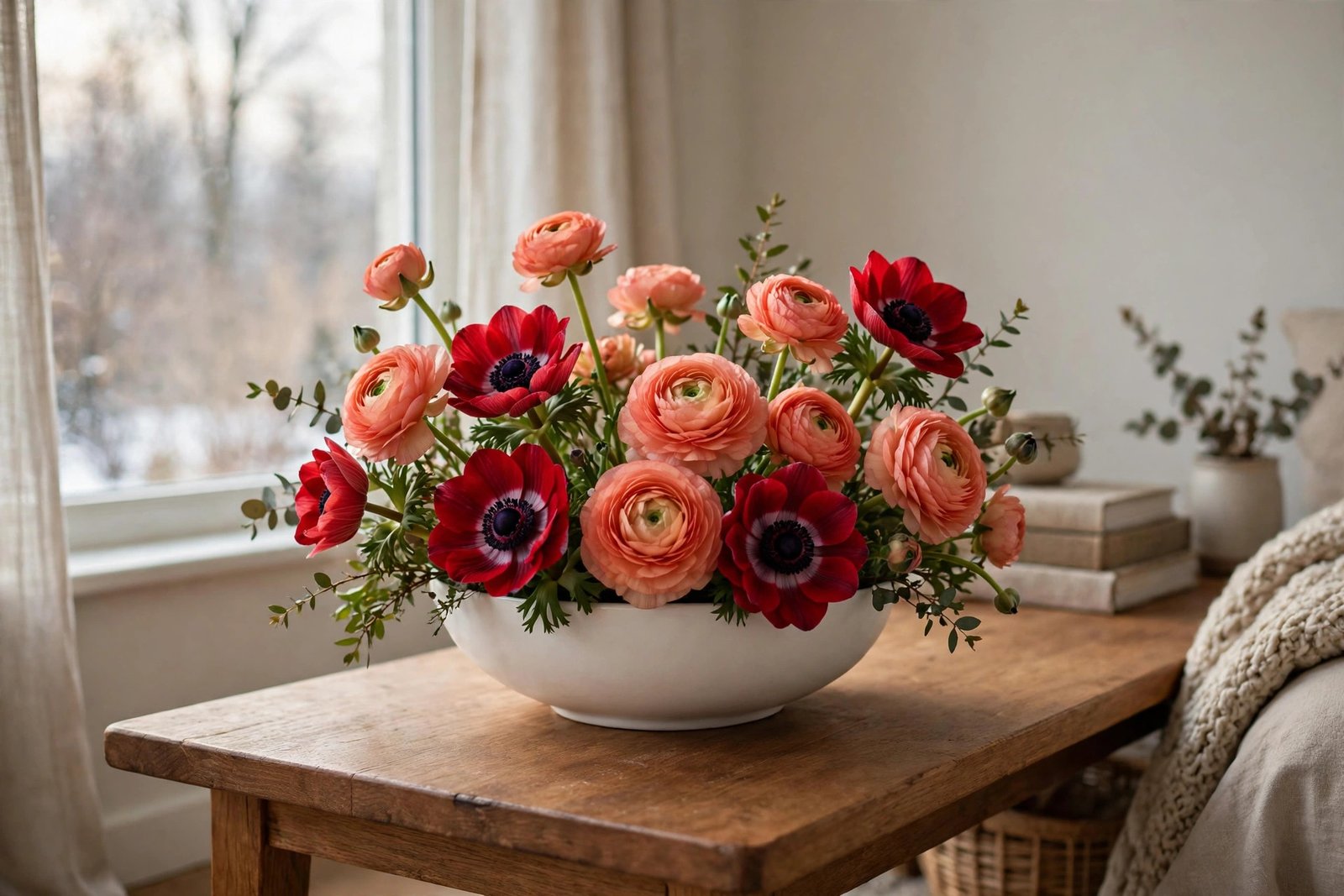
Ranunculus is the most romantic of the 12 Winter Bulbs to Force Indoors, with layers of tissue-thin petals in coral, pink, orange, or white. It suits anyone who loves roses but wants a flower that grows from a small, claw-shaped corm. A pot of ranunculus looks like a tiny rose garden.
Soak the corms in water for a few hours until they plump up, then plant them pointed-end down, an inch deep in moist soil. Keep the pot cool and bright, and water it lightly until growth starts.
Pro tip: Start ranunculus in a cool room and move it into the living room only once the buds open. The cool start keeps the stems short and strong.
Mistake to avoid: Planting the corms upside down. The little claws point down, and a corm planted the wrong way up struggles to sprout.
12. Anemone
Anemone is the most striking of the 12 Winter Bulbs to Force Indoors, with wide, poppy-like flowers in deep red, purple, blue, or white around a dark center. It suits anyone who wants one bold flower per stem and a display that stops visitors in their tracks. A few anemones in a low bowl make a modern centerpiece.
Soak the corms overnight, then plant them an inch deep in a shallow pot and keep the soil moist but never wet. Give the pot bright light and a cool room, and the flowers will open in ten to twelve weeks.
Pro tip: Cut anemone stems for a vase when the buds are half open. They keep opening in water and last a full week on the table.
Mistake to avoid: Letting the pot dry out between waterings. Anemones wilt fast, so check the soil every morning while they are in bloom.
Frequently Asked Questions About 12 Winter Bulbs to Force Indoors
Here are quick answers about these 12 Winter Bulbs to Force Indoors and starting your first pot.
When should I start these 12 Winter Bulbs to Force Indoors?
Start the no-chill bulbs, like paperwhite and amaryllis, in November for December blooms, and again in December for January flowers. Start the chill bulbs in the fridge in early autumn, so they have ten to twelve weeks of cold before potting.
Do all 12 Winter Bulbs to Force Indoors need a cold period in the fridge?
No. Paperwhite, amaryllis, and freesia bloom without any chilling, which is why they are the easiest to start. Hyacinth, crocus, grape hyacinth, daffodil, tulip, snowdrop, and Dutch iris need eight to fourteen weeks of cold first, or they will grow leaves and never flower.
What supplies do I need to force 12 Winter Bulbs to Force Indoors?
A pot with drainage holes, potting mix, a paper bag for the fridge, and bulbs from a supplier that sells varieties meant for forcing. A spray bottle helps with watering, and bamboo stakes support tall stems.
Can I plant forced bulbs outside after they bloom?
Yes, in most cases. Let the leaves die back naturally after flowering, then plant the bulbs outside in spring. Paperwhite is the exception in cold climates, because it is not hardy enough to survive a freezing winter outdoors.
How do I keep forced bulbs from flopping over?
Give them bright light from the start and turn the pot every day so the stems grow straight. A cool room keeps the stems short and sturdy, and a thin stake tied loosely to the stem supports heavy flowers like amaryllis and tulip.
Fresh Blooms, Right on the Windowsill
These 12 Winter Bulbs to Force Indoors prove that a garden can bloom in January. A bowl of paperwhites, a pot of amaryllis, and a tray of crocus change the way winter feels.
Start with two or three of the 12 Winter Bulbs to Force Indoors this weekend and watch your first blooms open within the month. For more winter growing ideas, explore the other guides on this site.