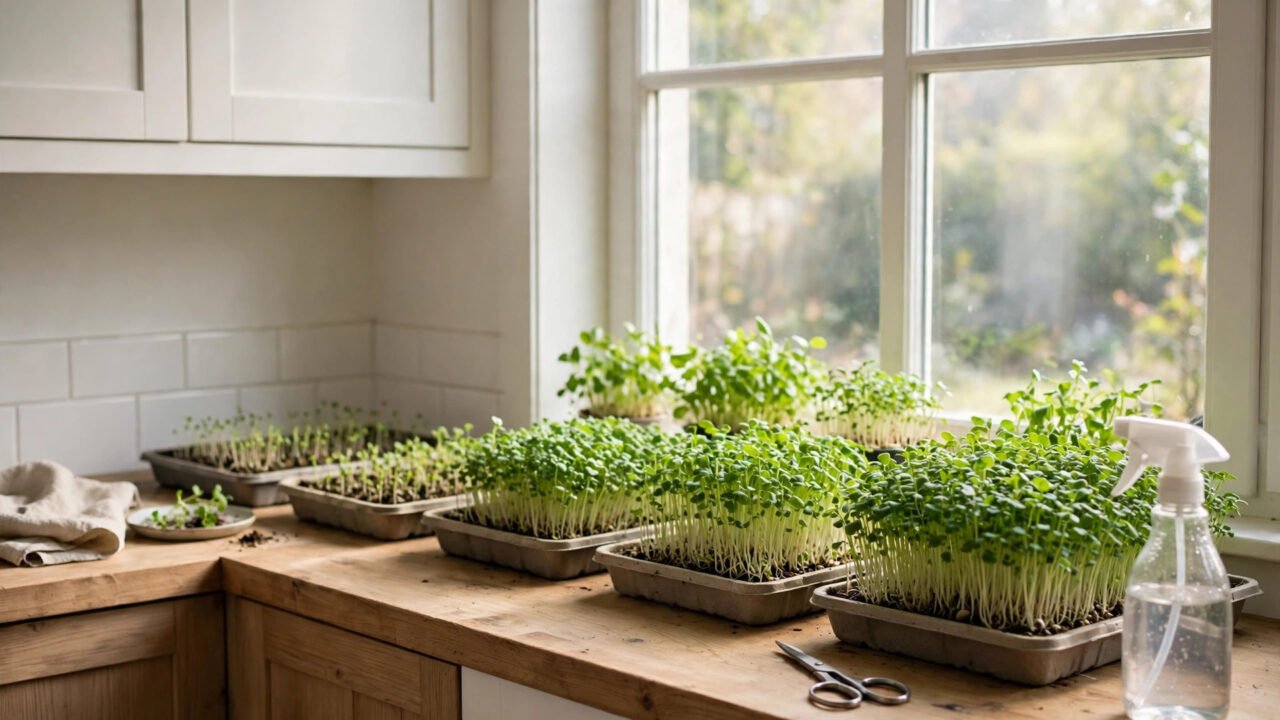
These 10 Easy Microgreens to Grow Indoors will put fresh, homegrown flavor on your table in as little as a week, using nothing more than a shallow tray, a little seed, and a sunny windowsill. No garden bed, no special equipment, and no long wait.

A microgreen is a young seedling, harvested just after its first true leaves appear, when its flavor is at its brightest. The 10 Easy Microgreens to Grow Indoors below are the most forgiving varieties for a first try, and each one earns its place with fast growth and real flavor. Pick two or three to start, then add more once your first tray is on the table.
Table of Contents
10 Easy Microgreens to Grow Indoors: Start With the Fastest
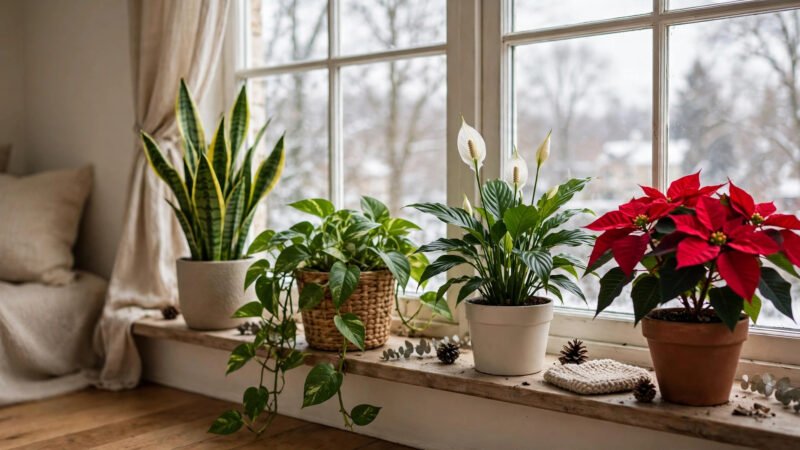
The fastest varieties are the best place to begin. These first three of the 10 Easy Microgreens to Grow Indoors sprout in a day or two and are ready to cut in about a week, so you see results before you lose patience. They also forgive a missed watering better than slower greens do. Pair them with our best winter indoor plants for a windowsill that stays green all season.
1. Radish Microgreens
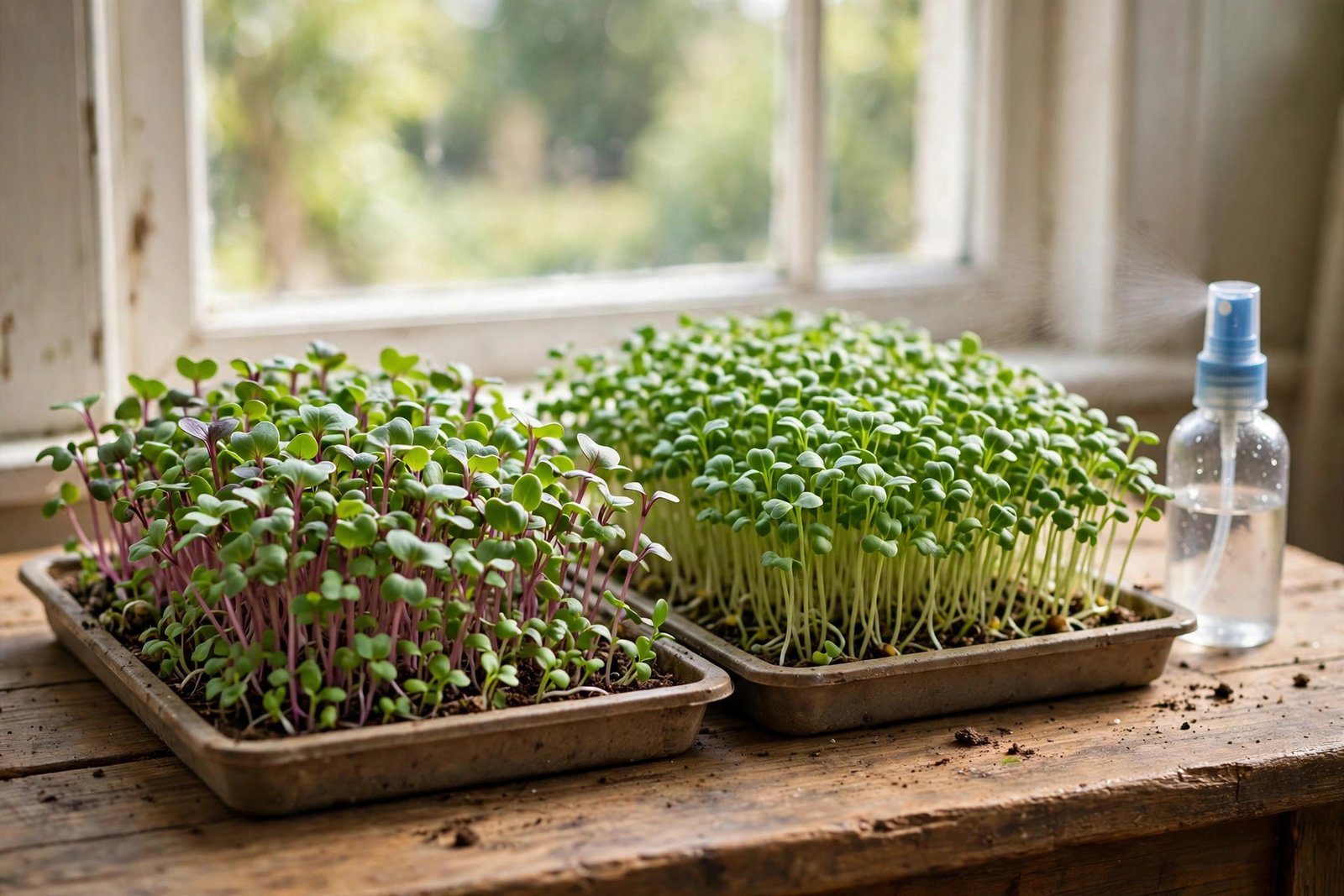
Radish microgreens are the fastest of the 10 Easy Microgreens to Grow Indoors, ready to harvest in five to seven days with a bright, peppery bite. They suit impatient beginners and anyone who wants a quick win. The flavor is like a mild radish with a fresh, green edge.
Scatter the seed thickly over damp potting mix in a shallow tray, press it down lightly, and mist the surface. Cover the tray for two days to keep it dark and moist, then move it to a sunny windowsill. Water from the bottom when the top feels dry.
Pro tip: Harvest with scissors just above the soil line, when the first pair of true leaves opens. Cutting higher keeps soil off the leaves.
Mistake to avoid: Sowing the seed too thinly. A sparse tray grows slowly and looks patchy, so cover the surface well.
2. Broccoli Microgreens
Broccoli microgreens are the mildest of the 10 Easy Microgreens to Grow Indoors, with a gentle, fresh flavor that works in almost any dish. They suit families, picky eaters, and anyone growing for daily use. The tiny leaves taste like young broccoli, soft and green.
Sow the fine seed evenly over damp mix and press it in without burying it. Mist twice a day until it sprouts, then give it bright light for seven to ten days. The stems stay short and the leaves stay tender if the tray gets at least four hours of sun.
Pro tip: Rinse the cut greens gently and pat them dry. They wilt fast when wet, so dry them before storing.
Mistake to avoid: Letting the tray sit in standing water. Roots rot quickly, so empty the saucer after watering.
3. Arugula Microgreens
Arugula microgreens bring a peppery kick to salads and sandwiches in seven to ten days. They suit cooks who like a little heat without growing a full garden bed. Among the 10 Easy Microgreens to Grow Indoors, arugula is the one that tastes most like its full-grown self.
Sow the seed on damp mix, cover the tray for a day, then uncover it in bright light. The seedlings grow fast and tall, so harvest when they reach two or three inches. A little breeze from an open window keeps the stems sturdy.
Pro tip: Cut only what you need for one meal. Fresh-cut arugula loses its bite within a day in the fridge.
Mistake to avoid: Waiting too long to harvest. Tall, leggy arugula turns bitter, so cut it while the leaves are still small.
Crunchy Shoots for Salads and Sandwiches
Shoots are the crunchy members of the group, grown from larger seed and cut tall. The next three of the 10 Easy Microgreens to Grow Indoors add texture to sandwiches, wraps, and grain bowls, and they grow well in deeper trays on the kitchen counter. Their trays look right at home next to the cutting board, and our winter kitchen decor ideas show how to style that corner so it feels intentional, not cluttered.
4. Sunflower Shoots
Sunflower shoots are thick, crunchy, and nutty, ready in seven to ten days. They suit anyone who wants a real crunch in winter salads. Of the 10 Easy Microgreens to Grow Indoors, sunflower shoots feel the most like a vegetable, not a garnish.
Soak the seed overnight, then sow it in a tray with about an inch of damp mix. Cover it with a second tray for three days while the roots push down, then lift the cover into the light. Water from below and harvest when the stems are three to four inches tall.
Pro tip: Peel off the dark seed hulls before eating. They come away easily once the leaves open.
Mistake to avoid: Skipping the soak. Dry sunflower seed sprouts unevenly and takes days longer.
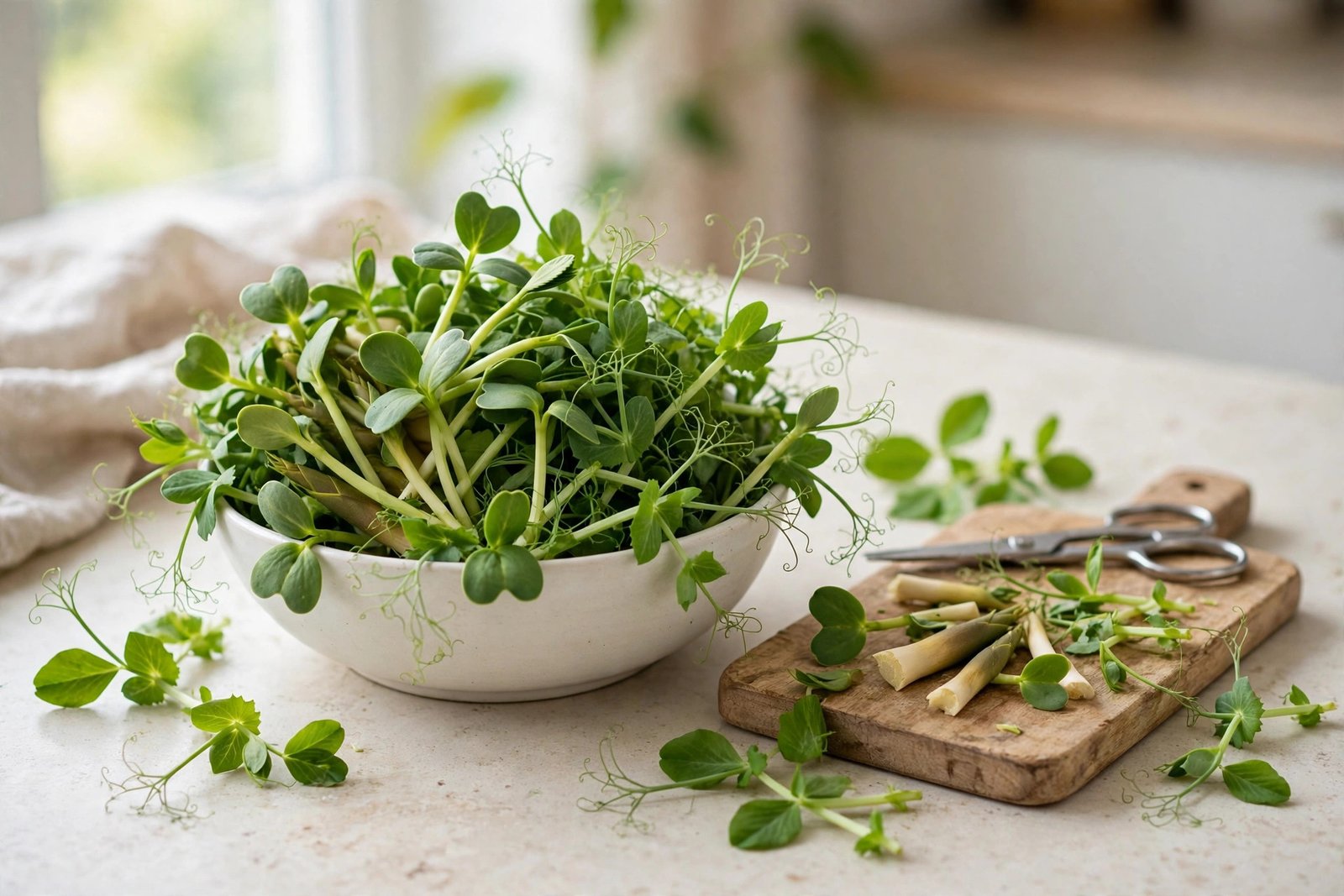
5. Pea Shoots
Pea shoots are sweet, tender, and generous, giving two or three cuts from one sowing in ten to fourteen days. They suit small kitchens, because one tray feeds a family for a week. Pea shoots are the sweetest of the 10 Easy Microgreens to Grow Indoors, with a flavor like fresh peas.
Soak the peas overnight, sow them close together on damp mix, and cover the tray for three days. Once the shoots reach four inches, cut the top half and let the tray regrow. The second cut is often the sweetest.
Pro tip: Eat the tendrils too. The curly tips are the most tender part and look lovely on a plate.
Mistake to avoid: Letting the tray dry out. Pea shoots wilt fast, so check the moisture every morning.
6. Mustard Microgreens
Mustard microgreens deliver a warm, peppery bite in seven to ten days, close to a mild wasabi. They suit cooks who love spice and want a green that stands up to rich food. Mustard is the boldest of the 10 Easy Microgreens to Grow Indoors, so a little goes a long way.
Sow the tiny seed evenly and press it into damp mix. It sprouts in two days and grows fast in bright light. Harvest when the leaves are about two inches tall, before the stems turn tough.
Pro tip: Mix a small handful into a plain salad. The heat spreads through the whole bowl without overwhelming it.
Mistake to avoid: Sowing mustard in a warm room. Heat makes it bolt and turn bitter, so keep the tray in a cool, bright spot.
Mild Leafy Greens for Everyday Meals
Not every microgreen needs to shout. The next two of the 10 Easy Microgreens to Grow Indoors are mild, leafy, and easy to use every day, from smoothies to scrambled eggs. A shelf or two is all the space they need, and these small-space organizing ideas for winter help a tray fit neatly beside cookbooks and jars.
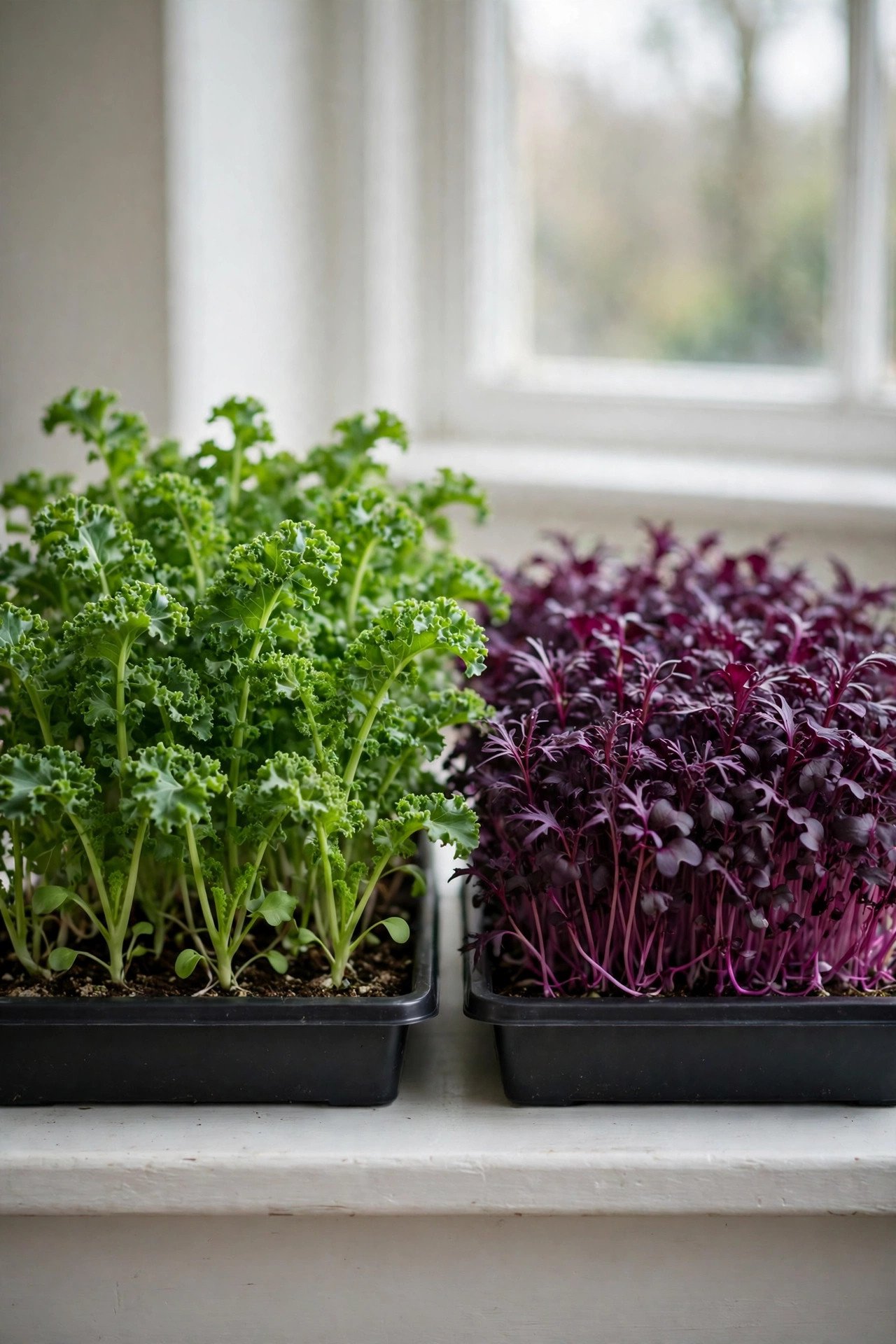
7. Kale Microgreens
Kale microgreens are soft, mild, and earthy, ready in eight to twelve days. They suit anyone who likes kale but finds full-grown leaves too tough. Kale is the easiest leafy green among the 10 Easy Microgreens to Grow Indoors, and the leaves stay tender at every stage.
Sow the seed on damp mix and keep the tray in bright light. The seedlings grow evenly and rarely have trouble with damping off. Cut them when the first true leaves open, and use them the same day for the best texture.
Pro tip: Blend kale microgreens into a smoothie. They add color and body without the strong kale flavor.
Mistake to avoid: Overwatering the tray. Kale likes damp soil, not wet soil, so mist lightly and water from below.
8. Red Cabbage Microgreens
Red cabbage microgreens are the prettiest of the 10 Easy Microgreens to Grow Indoors, with deep purple stems and green-purple leaves. They suit anyone who plates with color in mind. The flavor is mild and fresh, with just a hint of cabbage.
Sow the seed thickly on damp mix and cover the tray for two days. Bright light brings out the purple color, so give it the sunniest spot you have. Harvest in eight to twelve days, when the leaves are fully open.
Pro tip: Use red cabbage microgreens as a garnish on soup or grain bowls. The color pops against warm food.
Mistake to avoid: Growing them in a dim corner. Without enough light, the stems stay green and the color never develops.
Herbs and Colorful Finishers
The last two of the 10 Easy Microgreens to Grow Indoors are the slowpoke and the show-off: one herb that rewards patience, and one root green that paints the plate red. A living-room windowsill display doubles as decor while they grow, and our January living room refresh ideas show how a few green trays can wake up a tired room.
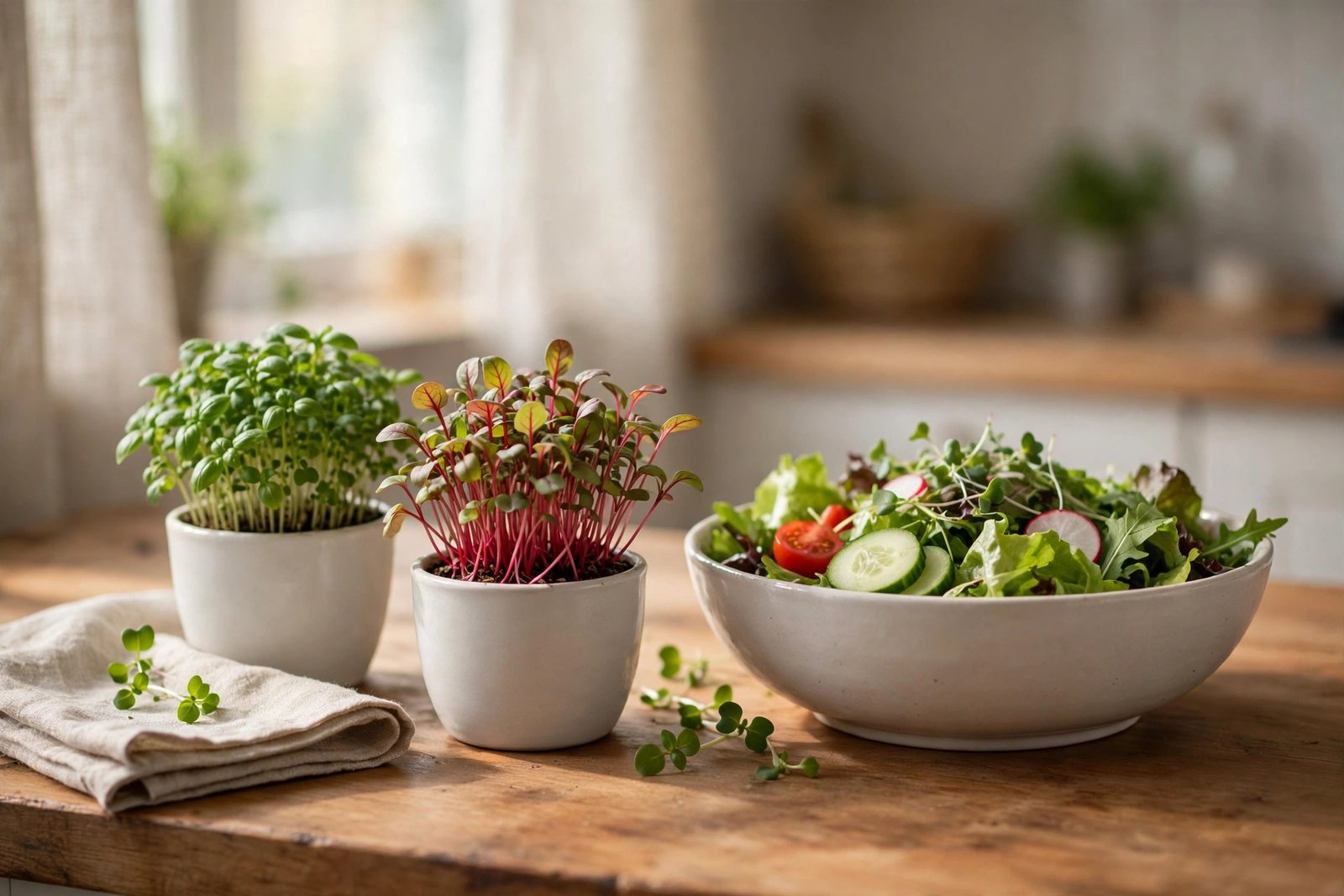
9. Basil Microgreens
Basil microgreens are the slowest of the 10 Easy Microgreens to Grow Indoors, taking fourteen to twenty-one days, but the flavor is pure summer basil in a tiny leaf. They suit patient growers and anyone who cooks Italian food. The leaves are small, fragrant, and worth the wait.
Sow the tiny seed on the surface of damp mix and do not cover it with soil. Basil needs light to sprout, so mist gently and keep the tray warm, near a radiator or on a heat mat. Once the true leaves appear, give it as much sun as you can.
Pro tip: Pick the leaves one by one instead of cutting the whole tray. The plant keeps growing and gives you basil for weeks.
Mistake to avoid: Chilling the tray. Basil sulks below 60 degrees, so keep it in the warmest room.
10. Beet Microgreens
Beet microgreens grow slowly, ten to fourteen days, but their red stems and green leaves are the most striking of the 10 Easy Microgreens to Grow Indoors. They suit anyone who wants color and an earthy, sweet flavor. The taste is gentle, like young beet greens.
Soak the seed for a few hours, then sow it on damp mix and cover the tray for three days. The seed is slow to wake up, so do not give up on it. Once it sprouts, bright light keeps the stems a deep red.
Pro tip: Add beet microgreens to a winter grain bowl. The red stems make a plain bowl look like a restaurant plate.
Mistake to avoid: Harvesting too early. The stems need time to color up, so wait until the leaves are fully open.
Frequently Asked Questions About 10 Easy Microgreens to Grow Indoors
Here are quick answers about these 10 Easy Microgreens to Grow Indoors and starting your first tray.

What are the best 10 Easy Microgreens to Grow Indoors for a first try?
Start with radish, broccoli, and pea shoots. They sprout fast, forgive a missed watering, and taste great on day one. Once those three are on the table, add sunflower shoots for crunch and red cabbage for color.
How much light do microgreens need indoors?
Four to six hours of bright light a day is enough for most of the 10 Easy Microgreens to Grow Indoors. A south-facing windowsill works in winter, and a simple grow light fills in on cloudy weeks. Pale, stretched stems mean the tray needs more light.
What supplies do I need to start these 10 Easy Microgreens to Grow Indoors?
A shallow tray with drainage holes, seed-starting mix, a spray bottle, and seed from a supplier that sells varieties meant for microgreens. That is the whole list. A second tray to use as a cover helps, and a small fan keeps the air moving.
What is the difference between microgreens and sprouts?
Microgreens grow in soil and are cut above the soil line, while sprouts are grown in water and eaten whole, roots and all. That soil-grown start is also why the 10 Easy Microgreens to Grow Indoors taste more like the full-grown plant.
How do I harvest 10 Easy Microgreens to Grow Indoors without wasting any?
Cut with clean scissors just above the soil line, only as much as you need for one meal. Rinse the cuttings gently, pat them dry, and store the rest in a container lined with a paper towel. Most trays keep in the fridge for three to five days.
Fresh Flavor, Right on the Windowsill
These 10 Easy Microgreens to Grow Indoors prove that a garden can fit on a windowsill and dinner can be fresher in January than in July. A tray of radish, a pot of basil, and a bowl of pea shoots change the way winter cooking tastes.
Start with two or three of the 10 Easy Microgreens to Grow Indoors this weekend and cut your first harvest within the week. For more winter growing ideas, explore the other guides on this site, and enjoy the small daily pleasure of snipping something green while the snow falls outside.