
Winter does not just change the temperature — it changes how much stuff lives in your home. Coats get thicker, boots get taller, blankets come out of storage, and the hallway that felt fine in July suddenly has no floor left. That is why 15 small space organizing ideas for winter are worth planning now, before the season’s gear piles up in the one corner you actually walk through.
Every idea below is renter-friendly, budget-friendly and reversible. None of them requires a renovation, a custom closet, or a single piece of furniture you would have to bolt to a wall. Read through, pick the two or three that match the rooms you actually have, and start there.
Introduced properly, these 15 small space organizing ideas for winter are not about buying more containers. They are about placing fewer, better containers exactly where the mess lands.

Why Small Spaces Feel More Crowded in Winter
Summer gear is thin and it dries fast. Winter gear is the opposite: a single wool coat takes up the footprint of four summer jackets, boots need to drip somewhere, and wet gloves need airflow or they smell. Heating season also pushes you indoors, so the same square footage holds more layers and more laundry.
The fix is not more storage volume — it is storage placed where the mess actually lands. If coats come off at the door, the storage belongs at the door. Organizing that fights the natural flow of a room always loses.
Measure before you buy anything
Write down the width and depth of the gap you want to fill — under the bed, beside the fridge, behind the door. Most organizing purchases fail because they were bought for a “typical” space rather than your actual one. A tape measure and two minutes will save you a return.
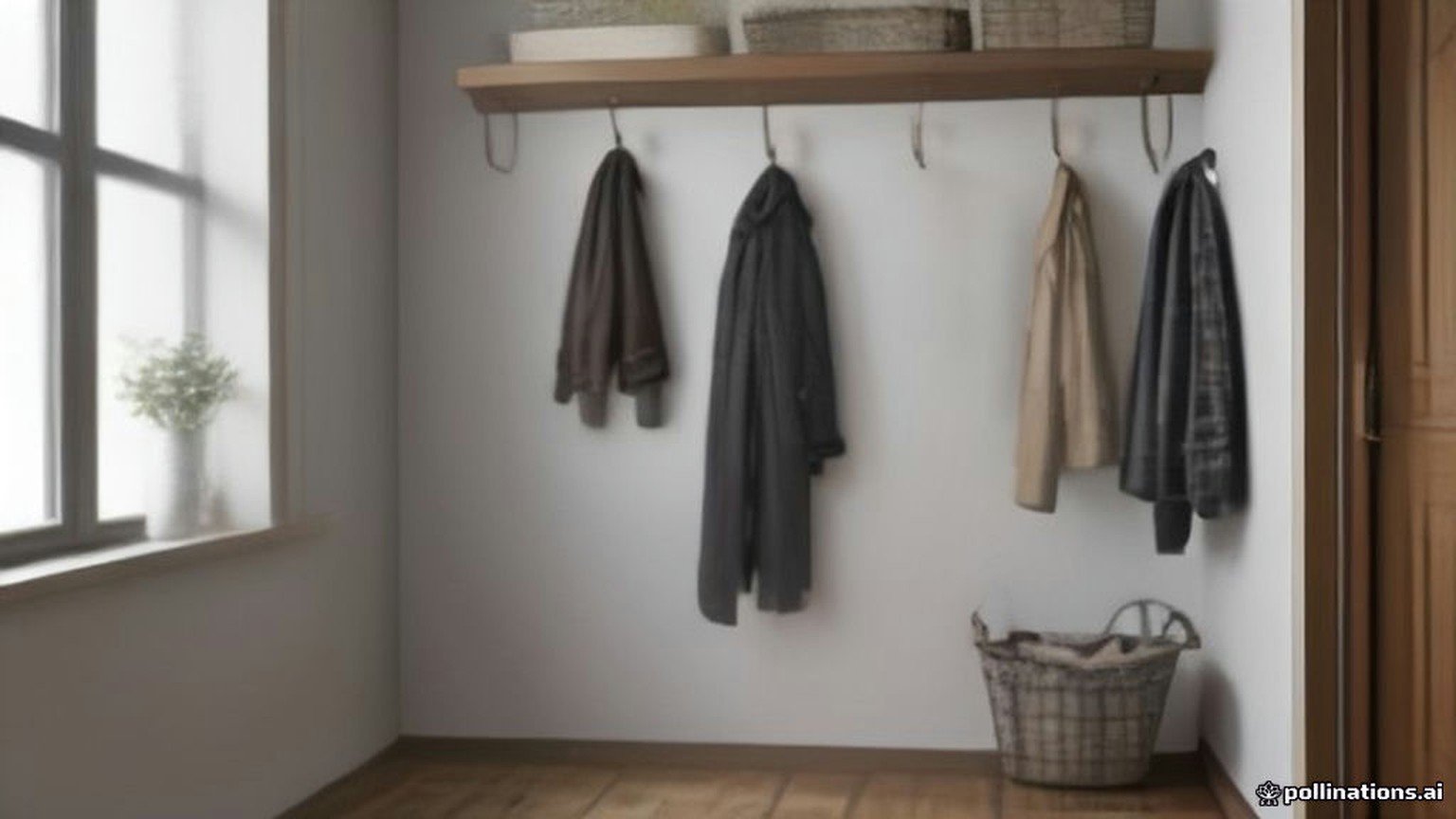
Entryway Ideas That Stop the Clutter at the Door
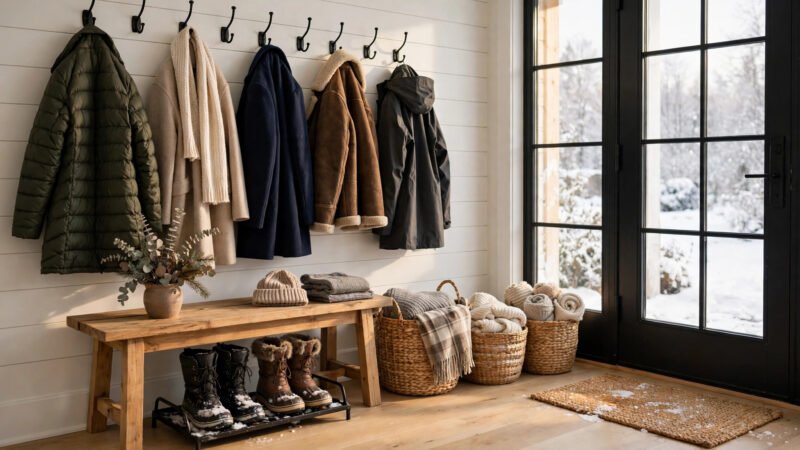
The entryway is where winter makes its first mess and where the biggest wins are available. These five fixes cover the majority of small-home entry problems.
1. Build a proper boot and drip zone
A shallow tray — not a deep bin — under the bench or beside the door catches meltwater without becoming a bucket you have to empty. Look for one with a raised lip and a size that fits at least two pairs of adult boots. Keep a folded cloth nearby for wet floors.
2. Use vertical hooks instead of floor baskets
Floor baskets eat the exact square footage you need to stand in. A row of wall pegs or an over-door hook rack at chest height holds coats, bags and scarves while keeping the floor clear. Weight-test any over-door rack on a hollow door before hanging a heavy parka on it.
3. Assign one basket per person for hats and gloves
Lidded baskets stacked two high beside the door give each household member their own zone. The lid matters: it hides the jumble and keeps wet wool from soaking whatever sits above. Small hands can reach a low basket without pulling everything out.
4. Choose a shoe rack that doubles as seating
A slim bench with two shoe shelves underneath serves as both a place to sit and a place to store. In a hallway narrower than a metre, look for a rack no deeper than 28 cm so people can still pass comfortably.
5. Mount a small shelf above the coat rail
The space between the top of the coats and the ceiling is almost always empty. One shelf there holds out-of-season gloves, spare scarves and a boot brush, all without touching the floor.
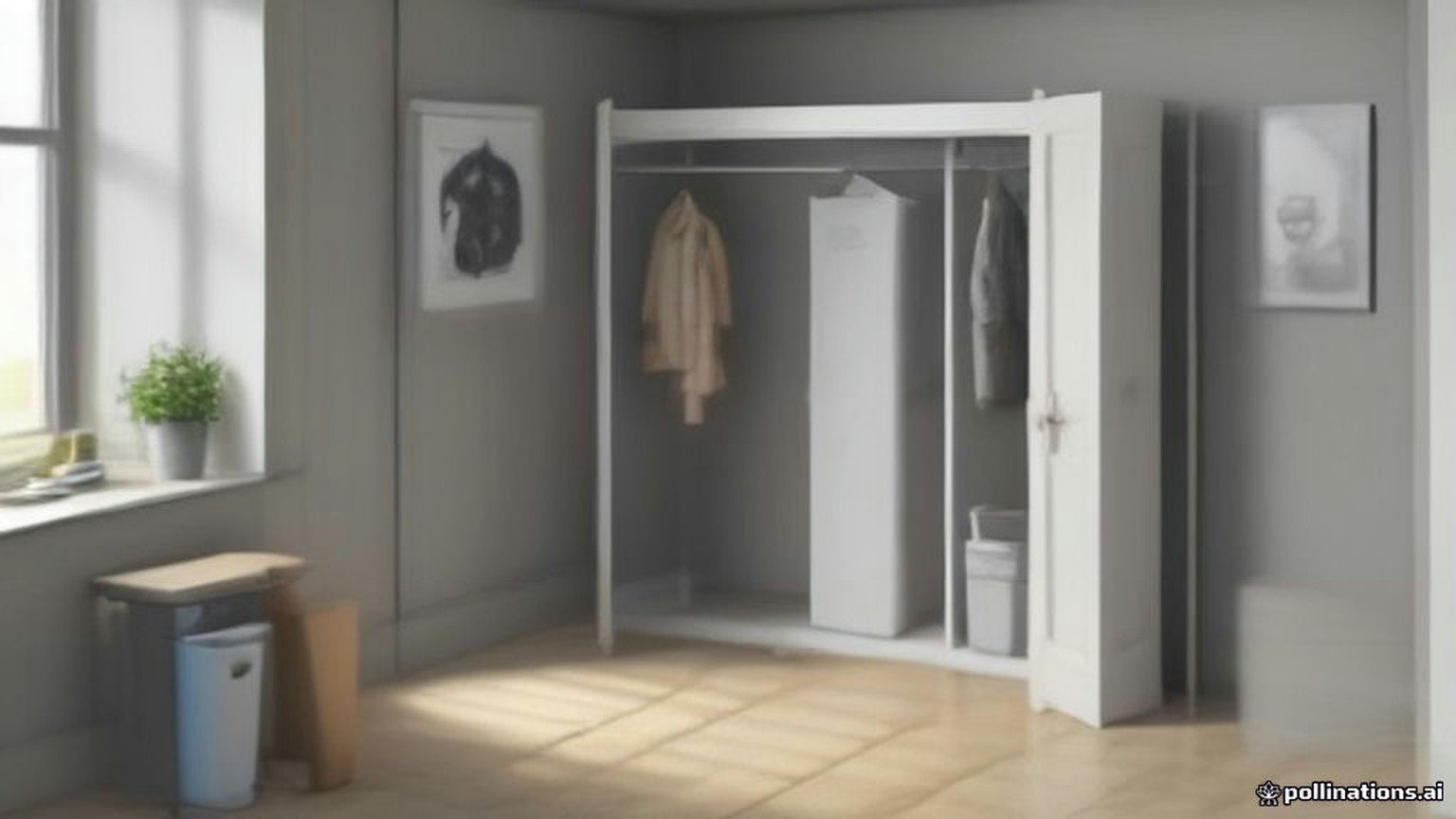
Bedroom and Closet Ideas for Bulky Winter Layers
Bulky knits are the hardest thing to store in a small bedroom, because they are too thick to fold on a normal shelf and too heavy to hang without stretching. These five ideas deal with volume rather than adding furniture.
6. Use under-bed rolling bins for sweaters
Low-profile bins on casters slide out without you having to lift the mattress. Choose shallow bins rather than deep ones — you want to see the whole stack when the bin is open, not dig through it. Fold sweaters in vertical rows so each one is visible.
7. Compress off-season bedding in vacuum bags
A duvet and two pillows can lose most of their bulk inside a vacuum storage bag. Store the bags flat under the bed or on the top shelf, and only compress items that are fully dry — moisture trapped in a sealed bag is how bedding ends up smelling musty by spring.
8. Add risers to make under-bed height usable
Bed risers are cheap and completely reversible, and even 15 cm of extra clearance turns a useless gap into real storage. Check that your bed frame has a solid edge to sit on, and keep the tallest items on the side you never walk past.
9. Hang a slim double rail in the closet
Most closets have dead space below short items. A second, lower rail under the shirts doubles hanging capacity for trousers and folded-over knits, and it installs without removing the existing rail.
10. Use the inside of closet doors
Door backs hold belts, scarves and a shoe organiser without taking an inch from the hanging space. An over-door pocket panel comes off in seconds when you move out.

Living Area, Kitchen and Utility Corner Ideas
The last five ideas cover the rooms where winter clutter hides in plain sight: the sofa, the kitchen cupboards and the corner where the boots actually end up.
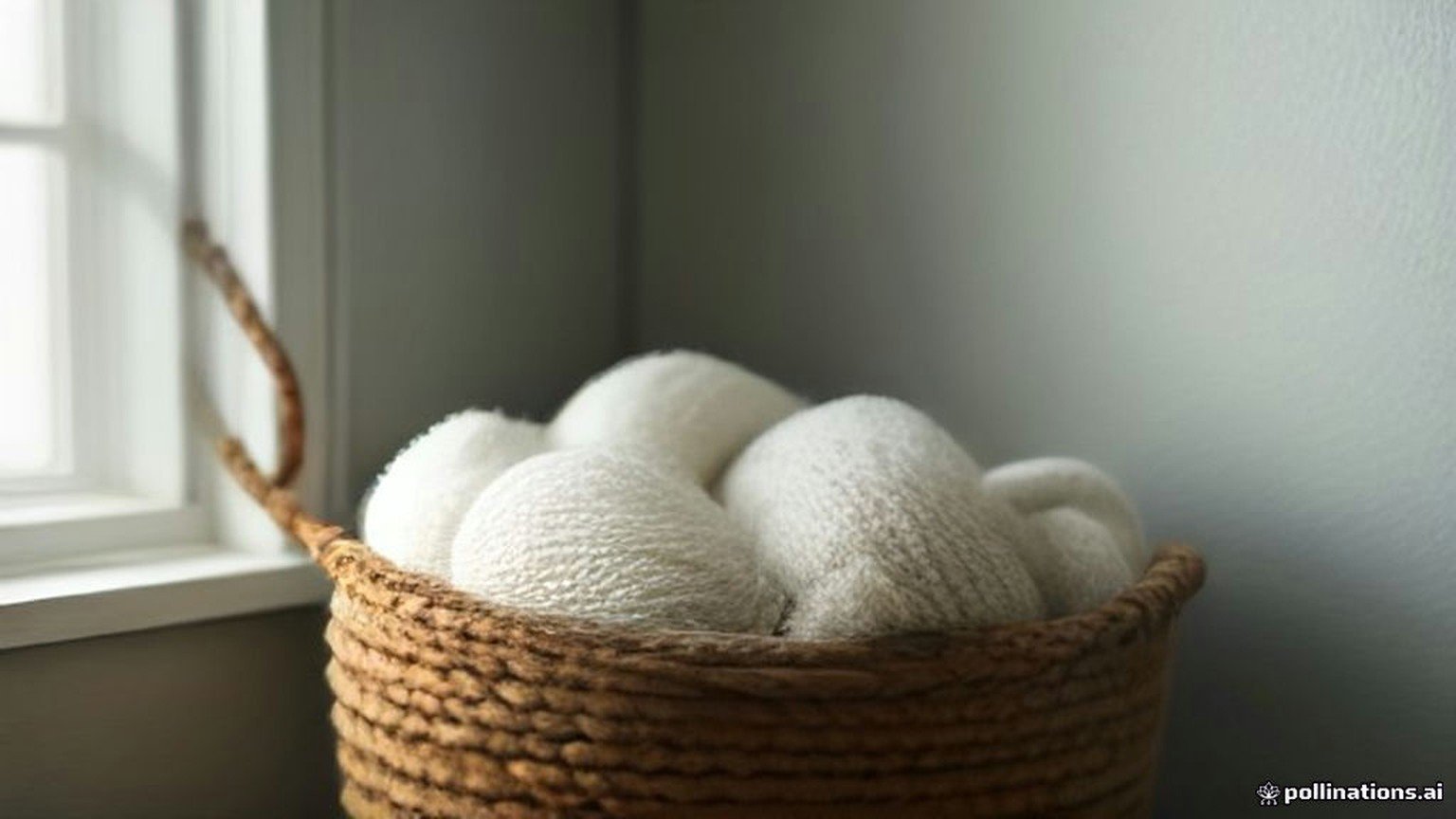
11. Put a lidded basket beside the sofa for blankets
Throws get used daily in winter and folded rarely. One basket sized to hold three throws keeps them contained and still within reach, which is the only way the system survives a real evening.
12. Stack clear, labelled bins on the top shelf
If you cannot see what is in a bin, it may as well not exist. Clear bins with a label on the short edge let you find the spare gloves in ten seconds.
13. Add a turntable to deep kitchen cupboards
A lazy Susan in a deep corner cupboard brings the back row into reach, which is where the cocoa, the winter spices and the soup tins tend to disappear. Measure the cupboard’s inner diameter first — a turntable that rubs the door will annoy you every day.
14. Use a tension rod to create a second shelf
A spring-loaded tension rod under a kitchen or utility shelf creates a hanging rail for spray bottles, brushes and cloths. Nothing is drilled, nothing is permanent, and the vertical gap you were wasting becomes useful.
15. Keep a rolling utility cart for winter gear
A narrow three-tier cart parked at the end of a hallway holds grit, a scraper, spare gloves and a boot brush, then rolls out of the way. Lock the casters so it does not drift.
15 Small Space Organizing Ideas for Winter: How to Make Them Work
Choosing the ideas is the easy part. These four habits are what keep them working through February.
- Start with the room you trip over most. One finished entryway reduces daily friction more than three half-done rooms.
- Clear before you contain. Do not buy a basket for things you could donate. Sort first, store second.
- Keep a single empty bin. A small reserve space absorbs the extra gear that arrives with gifts and visitors.
- Review on the first of each month. Ten minutes of putting things back where they belong is cheaper than a spring overhaul.
If you want a deeper framework, the general principles behind the KonMari tidying method — keep only what you use, then give it a fixed home — translate well to tight winter storage. Pair that with the hygge approach to cozy rooms and your storage starts to look like part of the decor rather than a compromise.
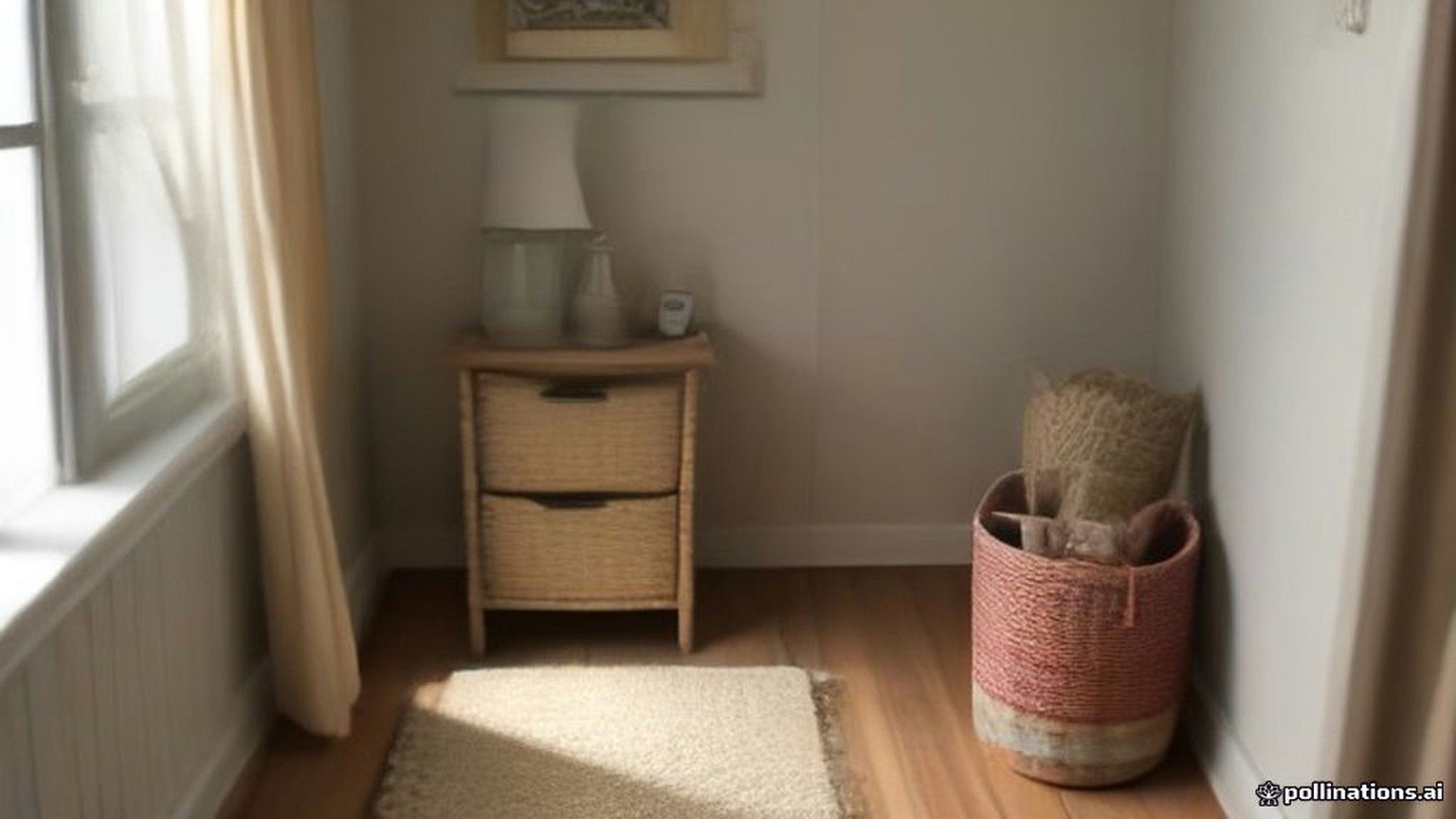
Where These Ideas Fit With the Rest of Your Home
Organization rarely stays in one room. Once the entryway is clear, the bedroom storage you already built in our winter bedroom cozy decor ideas guide becomes easier to maintain, because the overflow finally has somewhere to go.
The same applies to shared spaces. A tidy table makes the styling in our budget holiday table setting ideas guide easier to pull off on short notice, and the surfaces in our Christmas living room decor ideas post stay visible instead of buried under mittens. If you are hosting this season, the DIY Christmas wreath ideas for front door project is a good excuse to clear the entry table while you work.
Frequently Asked Questions
How do I organize a small entryway with no closet?
Use the wall above the floor. A hook rail at chest height, one lidded basket per person with hats and gloves, and a shallow boot tray will handle most of the load. If the wall is narrow, choose a single vertical rail rather than a wide horizontal one so coats hang deep instead of wide.
What is the best way to store winter coats in a small apartment?
Hang only the coats you wear this week and store the rest compressed or in a lidded bin on a high shelf. Rotate them monthly. Hanging every coat at once is what makes a small closet feel broken when it is simply over-full.
How can I stop boots from making the floor wet?
A shallow tray with a raised lip under the bench, plus a small absorbent mat, catches most of the meltwater. Empty the tray and wash the mat weekly — that one habit prevents the musty smell that makes people think their hallway is damp.
Do vacuum storage bags damage bedding?
They are safe for clean, completely dry duvets and pillows stored for a season. Avoid compressing anything still warm from the dryer, and give items a day to air out when you unpack them.
How often should I reset a small space?
Monthly is enough for a two-person home. Do it on a fixed date so it becomes routine rather than a reaction to a mess.
A Small Space That Works All Winter
You do not need to adopt all fifteen of these 15 small space organizing ideas for winter at once. Pick the three that solve the clutter you trip over every day, set them up this weekend, and let the rest wait until the season changes. A calm, workable home in January comes from a handful of small systems that fit your actual rooms.
Start with the door — it is the smallest zone in the house and the one that sets the tone for everything behind it.


5 comments